
The Map Is Not the Walk

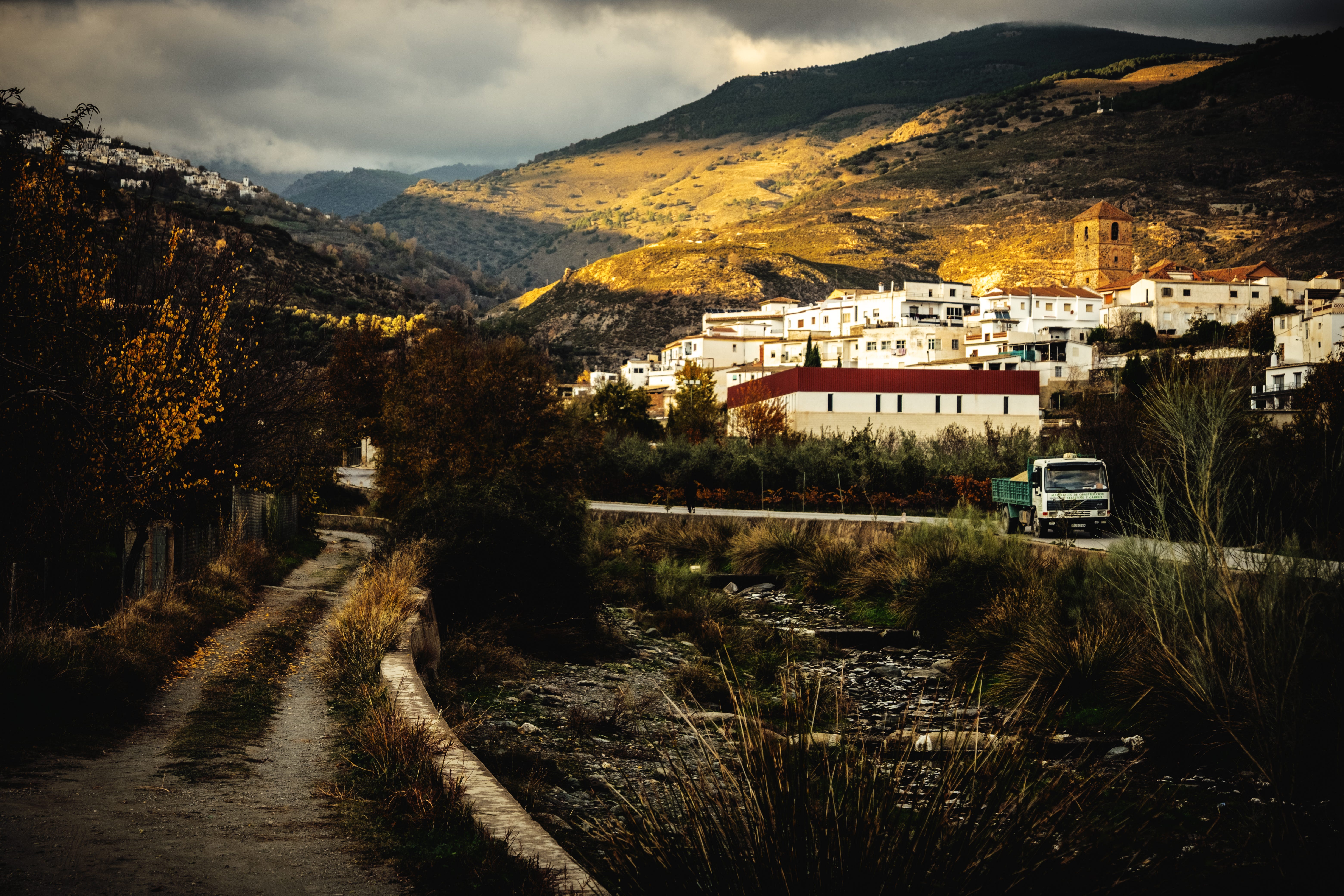
You’re out walking when the doubt creeps in.
Not full panic. Just that small drop in the stomach. The trail no longer looks quite right. There was a fork back there. Maybe you took the wrong path. The hill to the left seems familiar, but now you’re not so sure. Lunch in the next town suddenly feels less like a plan and more like a rumour.
So you stop and pull out the map.
A green line marks the trail. Contour lines bunch around the hill. There’s a stream, a bend, a wall. You look down, then up, then down again.
And then it clicks.
Ah. I’m here.
Relief.
You’ve found yourself on the map. The next stretch makes sense again. Eight miles to the town. Lunch is back on.
The map has done exactly what it is meant to do.
And yet nobody mistakes it for the walk itself.
If the trail is green on the map, nobody expects a bright green stripe across the hillside. If the hill is shown as contour lines and a number, nobody expects to find contour lines hanging over the rocks. If the café is marked with a tidy little symbol, nobody is shocked when the real place turns out to have steamed-up windows, a chipped mug, and two muddy dogs outside.
We know what a map does.
It simplifies. It leaves things out. It turns the land into something usable.
That is not a flaw. That is the point.
The map does not show the birdsong, the smell of damp earth, the sting of cold air, the shifting light on the hill, the ache in the legs, the muddiness of the path, or the small pleasure of seeing the café door come into view.
It leaves nearly all of that out.
And still, it is useful. In that moment of uncertainty, it restores orientation. It says: you are here. This is the way. Keep going.
Thought is doing much the same thing all day long.
What is actually here is instantly shaped into something readable, familiar, apparently certain. The sound is heard as birdsong. The tightness in the stomach is felt as worry. The shape in the distance is seen as a hill. A flurry of thought becomes a problem, a plan, a decision, a memory.
What appears shows up already known as something. This means that. That matters. This is happening. I am here. The world is out there.
That shaping is what I mean here by interpretation.
And like the walking map, it is useful. It helps us function. It helps us navigate the day. It brings the same little pulse of relief. Ah. Right. I know where I am. I know what this is.
That is why it has such a hold on us.
We do not only want practical guidance. We want orientation. We want the unease of not knowing to settle. We want the world to become readable again. We want the map to tell us where we are.
But this matters more than it may first seem.
A walking map is not just a reduced version of the land. It is a different kind of thing altogether. Lines, symbols, colours, labels, conventions. Useful, yes. But nothing like wet grass, loose stone, cold wind, birdsong, distance, effort, sky.
It does not resemble the walk in any deep way.
And interpretation is like that too.
Its usefulness does not make it accurate. It is excellent for navigation and hopeless as a portrait of reality. It is flat, and what is here is anything but.
That is the crucial point.
Otherwise we go on trying to sort life out at the level of the map. We replace bad interpretations with better ones. We swap a frightening map for a reassuring one. We trade an ordinary map for a spiritual map. But the basic mistake remains untouched.
The map is still being granted an authority it never had.
For practical purposes, interpretation works. It gets us from A to B. It gets us through the day. It gets us to lunch.
But with a walking map, we know it is a map.
With thought, that is forgotten.
The sketch passes itself off as the world.
The body becomes a fixed location. The world becomes something solid and outside. Time becomes a route we are travelling along, as if the eight miles to town on the map were carved into the ground itself. Thoughts report facts. Feelings prove meanings. Fear confirms danger. Lack confirms incompleteness.
A useful sketch becomes an unquestioned world.
That is where the trouble begins.
Not because interpretation appears. It always does.
The trouble begins when the map is mistaken for the land.
And here is the real benefit.
Once the map is recognised as a map, it loses its authority. It no longer gets to tell you what this is, who you are, or what must be feared.
That changes everything.
Fear may still appear. Thought may still race. Old reactions may still come and go. But they are no longer backed by false certainty. They no longer arrive as the truth of things. They arrive as part of the map.
That is a huge release.
The struggle to fix experience at the level of interpretation collapses. The pressure to keep locating yourself in thought falls away. What remains is the intimacy of what is actually here.
That is freedom.
Not because the map disappears. It does not.
Not because thought stops. It does not.
Not because practical life falls apart. It does not.
But because thought is back in its proper place. Useful for navigation. Useless as truth. No longer mistaken for reality. No longer asked to explain the whole of life.
Then intimacy returns.
Not the map of the walk.
The walk.
Birdsong. Cloud shadow. Cold air on the face. Mud underfoot. The roughness of stone. The sound of a gate closing behind you. The warmth of the café. The first sip of coffee. The whole unmanageable, overflowing texture of what is actually here.
This direct contact with what is here is what I mean by intimacy.
But seeing this is not the same as thinking it.
You can read all this and agree with it. You can form a new thought called interpretation is only a sketch, repeat it, and build a neat position around it.
That is still thought.
What matters is recognition.
Recognition of what this is. Recognition of the actuality already here, and recognition that interpretation does not define it.
That is the shift.
Not achieving a new state.
Not building a better philosophy.
Not improving the map.
Recognizing the actuality already present, and seeing that the semantic overlay, the whole ordinary picture of what you are and what this is, is not the thing itself.
What is to be recognized is already here. It is not hidden, elsewhere, or waiting to be produced. It is this.
The difficulty is that we are addicted to our semantic systems. We take them to be true. We think we already know what this is, so we do not let it reveal itself.
This is why Peter Brown’s Yoga of Radiant Presence matters.
Not because it offers a better map.
Not because it gives a more spiritual interpretation.
But because it returns you to the actuality of experience, so recognition can occur.
And when recognition occurs, interpretation loses its false authority. Not because it disappears, but because it is no longer mistaken for reality.
If this speaks to something you already sense, I explore this more deeply in the Patreon community and in the online workshops.
Patreon Community: https://members.thisradiantspace.com/
Online Workshops: https://thisradiantspace.com/#workshops
Rob, one hit folows the next. Your examples make it very easy for me to comprehend and recognize. Instead of covering a vast field of possible topics, for me it feels that every article of yours is a helpful and skilful repetition of the same thing, just from another valuable new angle. Aiming at settling in more and more. Thanks a ton and a bright weekend to you
I’m finding this particular metaphor difficult: map vs reality. Not sure why…just can’t quite connect.