
Strange Mercy
The Penknife Under the Pillow

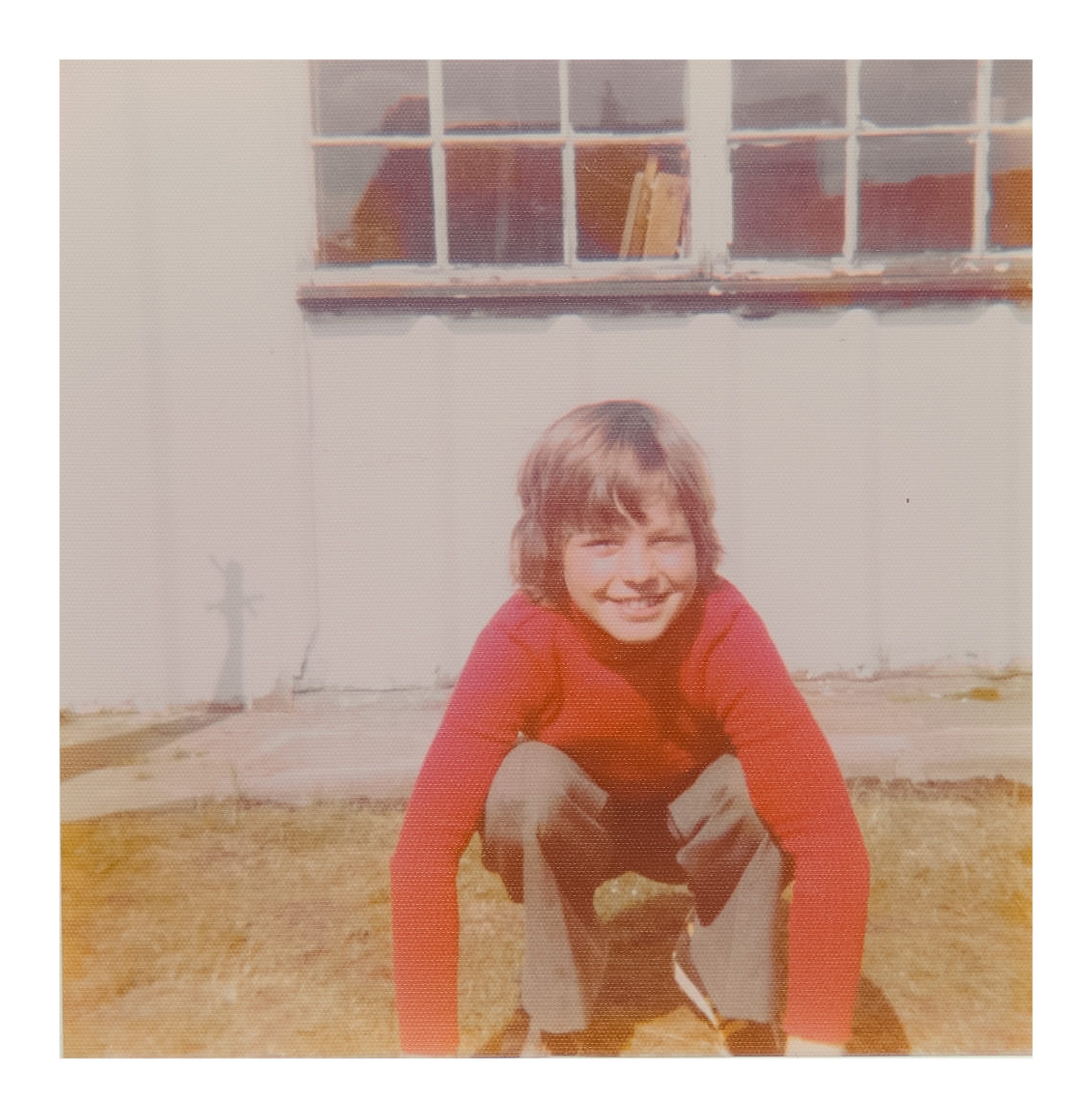
There was a boy whose parents separated when he was about eight years old.
It was England, around 1975. A Saturday morning.
The radio was on somewhere in the house, Steve Harley and Cockney Rebel singing through the ordinary morning noise. The boy sat crunching his Cornflakes, half-listening, half-messing about with his brother.
Nothing seemed unusual.
His father came downstairs.
He said, as gently as he could:
“Son, I’m leaving. I’m going to live in another house.”
He tried to explain. He did his best. But the boy could not take it in. The words arrived, but they did not make a world he could understand. They were too large. Too strange. Too impossible.
Then his father left.
For a while, the boy saw him again.
A few visits. A few brief returns. Each one carried the same impossible mixture: the relief of seeing him, and the dread of knowing he would have to leave again.
The boy would try to enjoy the time. He would try to be normal. He would try to take in his father’s face, his voice, his smell, the way he moved, as if enough attention could make him stay.
But the leaving always came.
And each time, it broke him again.
Then, slowly, even those visits stopped. His father moved away to another country. Letters came now and then, but a letter is not a father. Ink on paper is not a hand on your shoulder. A sentence saying “I miss you” is not the same as someone being there.
Life carried on, because life does that. School. Meals. Television. Bedtime. The ordinary machinery of childhood.
But something had gone missing from the world.
The boy carried that absence everywhere. Not as an idea. Not as something he could explain. More like a weather in him. A pressure. A waiting. A hope that did not know where to put itself.
Then one night, some time later, he had a dream.
In the dream, he had gone to visit his father in that other country.
They were together again. Not awkwardly. Not carefully. Not in one of those tense little visits where everyone knows the clock is running. They were simply together.
They walked about. They laughed. His father was relaxed and kind. The boy could feel himself open again in that easy way children do when the person they love has returned and the world, for a moment, has stopped being wrong.
At some point, they went into a shop.
And there, in the shop, the boy saw the most wonderful penknife he could imagine.
To a boy of that age, a penknife is not a small thing. It is adventure. It is danger. It is usefulness. It is adulthood folded into the palm of your hand.
And this one was perfect.
His father bought it for him.
The boy was overjoyed. Beyond overjoyed.
Because of course, it was not just a penknife.
It was proof.
Proof that the day had happened.
Proof that his father loved him.
Proof that something from that happiness could be kept.
Then, in the dream, something strange happened.
A little lucidity appeared.
The boy somehow knew he was dreaming.
And because the penknife mattered so much, he had an idea. He would put it under his pillow. Then, when he woke in the morning, it would still be there.
That is how important it was.
He did not want to lose it. He did not want the day to vanish. He did not want his father’s love to dissolve back into absence.
So he put the penknife under his pillow.
Then he woke.
And of course, the first thing he did was reach under the pillow.
Nothing.
No penknife.
Just the sheet. The mattress. The ordinary morning.
The penknife was gone.
Of course it was gone.
It had been a dream.
And we all understand that.
No one needs a lecture on the metaphysics of dreaming.
The dream may have been vivid. The country may have seemed real. The shop may have had shelves and light and a counter and a door. The penknife may have had colour, weight, shine, and importance.
But when the boy woke, it was obvious.
There had never been a penknife under the pillow.
There had never been a shop he could return to.
There had never been a day that could be carried into morning.
The whole thing was dream.
Not nothing.
Not meaningless.
Not unreal in the sense of being absent.
It appeared. It was felt. It mattered. It carried love, longing, grief, hope, and the desperate intelligence of a child trying to keep what he could not keep.
But the penknife was not there in the way he thought it was.
It did not exist apart from the dreaming.
And this is where the story becomes interesting.
Because we think this only applies to dreams.
We say: yes, of course. Dreams are like that.
Then we wake up into this world and immediately assume the opposite.
Here, we think, things really are here.
The room is here.
The table is here.
The body is here.
The father is here, or not here.
The past is here as something that happened.
The loss is here as something solid.
The self who lost him is here as something definite.
But is that actually what we find?
Not as a belief.
Not as a spiritual idea.
Not by reducing waking life to a slogan about dreams.
Actually look.
Take any ordinary thing near you.
A cup. A phone. A book. A penknife, if there happens to be one.
There it is. Plainly present. Not hidden. Not vague. Completely available.
But what is actually there?
There is shape. Colour. Texture. Use. Memory. Name. Meaning. A whole world of implication arriving instantly.
It seems to become a thing.
But the more closely you stay with the actual presence of it, the stranger it becomes.
The thing never quite resolves.
The cup is obvious.
No one is denying the cup.
But when you look closely, where is the fixed thing called “cup”? Where is the stable object that thought seems to have captured?
There is this gleam. This curve. This weight. This familiarity. This usefulness. This little pulse of recognition.
Cup.
And the word lands so quickly that we think it has told us what is there.
But it has not.
It has only named something that remains far stranger than the name.
The same is true of the body.
The body seems obvious. Of course it does. But when it is actually felt, directly, where is the solid, separate thing we imagine? There is pressure, warmth, movement, tension, image, memory, thought, ownership, habit. A whole constellation of experience.
But does it resolve into “my body” in the way the mind assumes?
And the past?
The past seems obvious too. The father leaving. The morning. The radio. The Cornflakes. The dream. The hand reaching under the pillow.
All of that seems to stand behind this moment as something fixed and done.
But where is it now?
There is memory.
There is image.
There is feeling.
There is ache.
There is meaning.
There is the story of what happened.
But where is the past itself?
Where is the thing we think memory gives us?
This is not an argument against memory. It is not saying nothing happened. It is not dismissing the heartbreak of a child.
It is only asking us to look more closely.
What is actually present?
And does what is present ever resolve into the solid thing thought says is there?
Again and again, it does not.
There is experience.
Rich, immediate, precise, intimate experience.
But the object, the past, the loss, the self at the centre of it, the world in which it all supposedly happened, these do not arrive in the way thought promises.
They are suggested.
They are implied.
They are felt.
They may be useful. They may be necessary. They may be how ordinary life functions.
But they are not found as solid, independent things.
They are not under the pillow.
The boy’s sorrow was real.
Not real as a fixed object. Not real as a thing stored somewhere in the machinery of time. But real as this vivid appearance, this ache, this longing, this love, this reaching.
That matters.
Because this is where people often misunderstand.
They hear this kind of investigation and think it is denying life. Denying grief. Denying love. Denying the child.
But it is not denying anything.
It is taking experience more seriously than the story does.
The story says: there was a boy, there was a father, there was a loss, and that loss became part of him.
Experience says something stranger.
Here is ache.
Here is memory.
Here is love.
Here is the tightening in the chest.
Here is the image of a father walking away.
Here is the little hand under the pillow.
Here is the impossibility of keeping anything.
All of it is here.
But none of it resolves into the solid tragedy thought makes of it.
And that does not make it less tender.
It makes it more tender.
Because now the heartbreak is not locked inside a story called “my life”. It is not trapped in the past. It is not owned by a separate self who has to carry it forever.
It is this.
Appearing now.
Vivid.
Unfixed.
Unpossessed.
Unresolved.
The boy wanted to keep the penknife because he wanted to keep the love.
And who could blame him?
That is the human movement.
We want to keep what shines.
We want to keep what saves us.
We want to keep the person, the moment, the proof, the feeling, the certainty.
So we put it under the pillow.
Again and again.
And again and again, when we look closely, nothing solid is there.
Not because life is empty in some bleak way.
Because life is not possessable.
Because this radiance never becomes an object.
Because what we are trying to keep has never actually left the immediacy of this.
So perhaps this is not only a story about a child and a dream.
Perhaps it is the shape of ordinary human life.
We are always reaching under the pillow.
For the thing that will prove we are loved.
For the moment that will finally stay.
For the person who will not leave.
For the answer that will make everything safe.
For the awakening that will end the ache.
For the self we can finally know and hold.
We keep trying to turn the living display into something we can possess.
A relationship.
A memory.
A future.
A spiritual state.
A life story.
A self.
And for a moment, it seems to work.
The name lands.
The story forms.
The object seems solid.
The person seems graspable.
The past seems established.
The future seems waiting.
The “me” at the centre of it all seems obvious.
Then we look more closely.
And the whole thing softens.
Not disappears.
Softens.
It loses the hard edge of certainty. It loses the authority we had given it. It no longer stands there as a fixed object, separate from the immediacy in which it appears.
The penknife becomes dream again.
The cup becomes this strange gleam of presence.
The body becomes this moving field of sensation, image, thought, and implication.
The past becomes memory appearing now.
The self becomes a felt suggestion, not a found entity.
The world becomes vivid, intimate, and impossible to pin down.
And this is not a loss.
It may feel like one at first, because we are so used to trusting solidity. We think solidity is safety.
But perhaps solidity was never safety.
Perhaps solidity was only the dream of safety.
Perhaps what is actually here is more intimate than safety.
Not something you can keep.
Something you are.
And this is the strange mercy of it.
The boy reached under the pillow and found no penknife.
But he did not find nothing.
He found morning.
He found the sheet under his hand.
The faint warmth of the bed.
The room returning.
The ache of disappointment.
The warm tears of heartbreak running down his cheeks.
The memory of his father’s face.
The love that had taken the shape of a knife in a dream.
All of that was here.
Not as possession.
As presence.
The penknife could not be kept because it had never existed as a separate thing. It was dream. It was longing. It was love. It was the mind’s brilliant attempt to make the unkeepable keepable.
And perhaps our whole life is like that.
Not false.
Not meaningless.
Not something to dismiss.
But not what we think it is.
This life, this room, this body, this grief, this love, this world, this “me” reaching for something solid, all of it appearing with unbearable intimacy.
All of it obvious.
All of it vivid.
None of it quite resolving into the thing we imagine.
So maybe the invitation is very simple.
Before reaching under the pillow again, pause.
Feel what is here.
Not what thought says is here.
Not the object.
Not the story.
Not the proof.
Not the thing you hope to keep.
This.
The raw, immediate, ungraspable actuality of experience.
The boy wanted the penknife.
Of course he did.
We all do.
But what he found, though he could not have known it then, was something stranger and more beautiful.
Nothing under the pillow.
And everything here.
More focused writings and live inquiry sessions are available on Patreon:
https://members.thisradiantspace.com
For those interested, there are also a couple of places left on the workshop starting in June, where we’ll explore this directly in a live setting.
This is so beautiful, Rob! One of the most beautifully and clearly expressed expressions of the nature of reality, not as dry abstract philosophy but as immediate rich human experiencing, that I've ever read. Deeply moving and revealing and affirming and inclusive and just brilliant. And it was just what I needed this morning. It touched the heart so deeply and dissolved everything while not eliminating anything. Just beautiful! Thank you! 🙏❤️🦋
What I want to say sounds very strange but it's what keeps coming up about this piece: It just destroyed me. But in the best way possible. Incredible. Thank you.